How I Learn Languages, Part 1: Before Starting
There’s no easy way to learn a language. You won’t hear that from a YouTube video that’s trying to sell you something, so this part is about realistic expectations.
“Just learn like a baby”
Lots of people online say all it takes is a Lingopie subscription and vegetating on the couch, because that’s how babies do it. Here’s what I have to say about that:
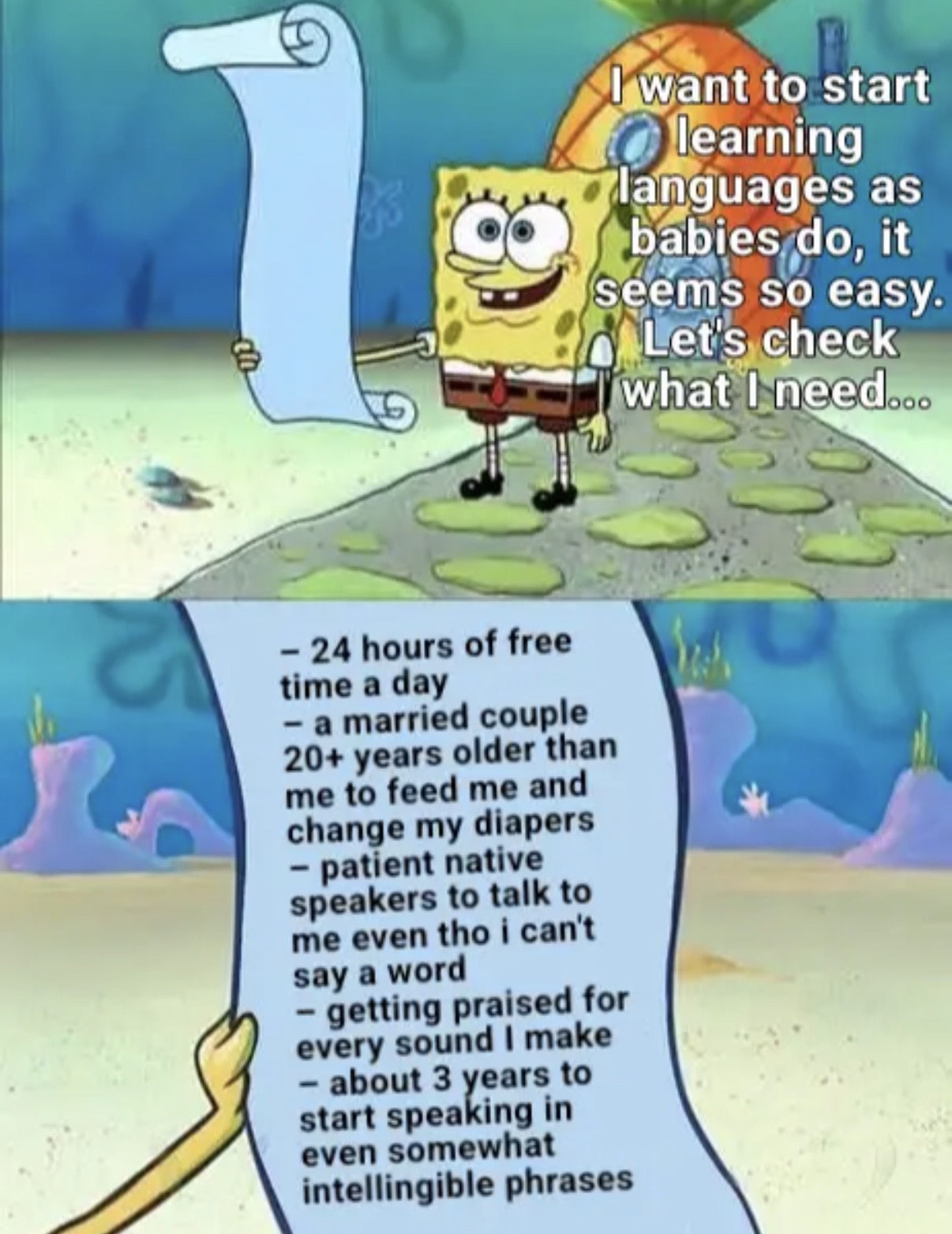
I’d tune this advice out. It only slows you down.
Duolingo
In my experience, Duolingo is good for learning a language’s alphabet, and not much else. Once you know the letters, I’d uninstall it. This article covers why it won’t get you much further.
How long it takes
Short answer: at least a year.
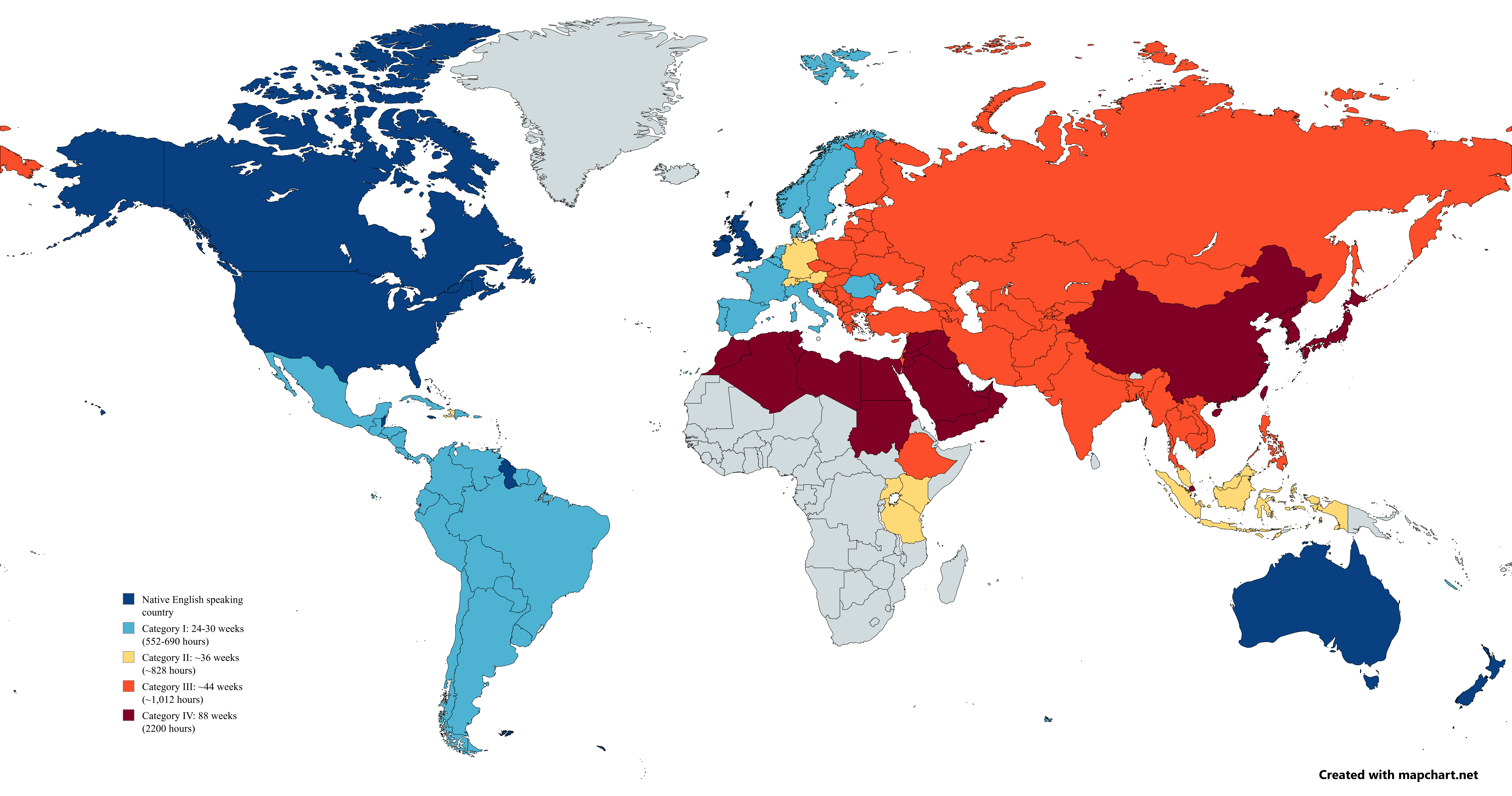
The US Foreign Service Institute (FSI) estimates are the numbers the language learning community usually cites. How long a language takes mostly depends on how close it is to your native language. To estimate your own timeline, divide the hours for your language by how much time you’ll spend per day. For example, Romanian is Category I, and 690 hours at 2 hours a day comes out to about a year.
Here are my Romanian stats in LingQ. I’m upper-intermediate:
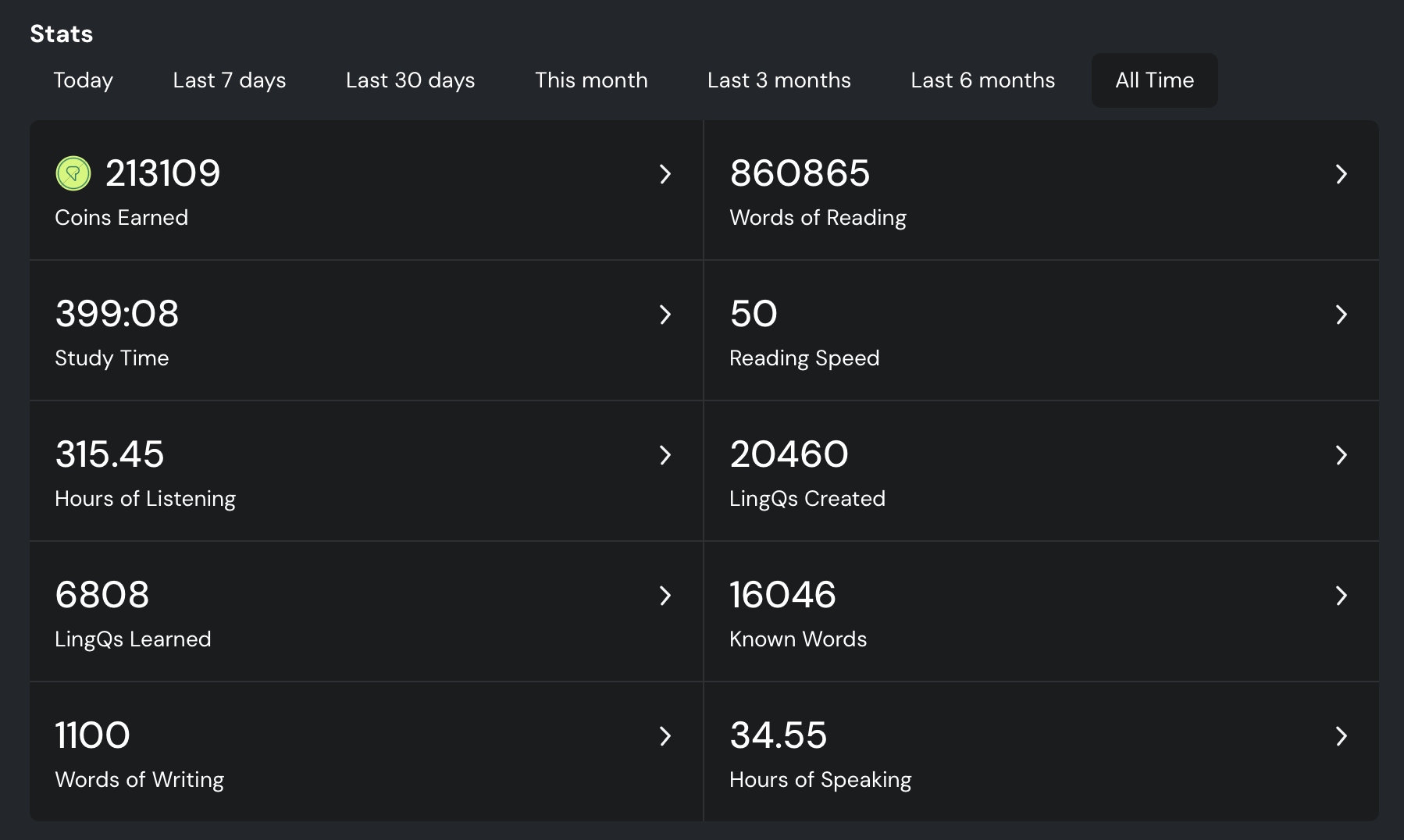
My study time (399 hours) plus my listening time (315 hours) comes to about 714 hours, which lines up with the FSI estimate. One caveat: I tracked my time outside LingQ and added it manually. If you only count what LingQ logs on its own, the number won’t match your level as closely.
Deciding whether I care about an accent
This choice has a big impact on how long learning takes, and most people never think about it. Keeping an accent has real benefits that don’t get talked about enough.
The biggest one: when native speakers hear an accent, they subconsciously slow down and switch to simpler, more common words. Linguists call this foreigner-directed speech, and it’s not prejudice (here’s a short explainer). It makes conversations much easier.
The only real payoff I noticed from a native accent is impressing people at first, and it costs a lot. I personally love nailing pronunciation, but I wouldn’t recommend it to most people:
- It takes much longer. Saying each word out loud adds seconds to every review, compared to a split second of just recognizing it.
- Native speakers get frustrated, at least in my experience, which cancels out the impressing part. Their subconscious slow-down never kicks in, so when you ask them to slow down, they gradually speed back up until you have to ask again.
An accent isn’t a failure. We aren’t built to hear sounds that don’t exist in our native language, and getting them right takes meticulous practice. This video explains why really well.
If you decide you do want to lose the accent, here’s how I practice pronunciation.